


Show me the incentive and I will show you the outcome - Charlie Munger
💡 Did you know?
The Great Divergence: How Colonial Trade Scaled the Modern Global Economy
Globalization didn’t start with the internet. It started when scale—of trade, power, and information—became possible.
During the height of the British East India Company’s influence in the 18th century, the organization transitioned from a mere trading entity to a territorial power controlling approximately 50% of world trade. This unprecedented shift allowed the company to maintain a private army of over 260,000 soldiers, which was twice the size of the British Army at the time.
A century later, the transatlantic telegraph cable, completed in 1858, reduced the communication time between London and New York from roughly 10 days (via steamship) to a mere 17 hours. This technological leap facilitated a 2,000% increase in transcontinental financial message volume within the first decade of reliable operation, effectively birthing the modern era of high-speed global markets.
📜Today…but some years ago!
April 29, 1429: The Siege of Orléans
Joan of Arc enters the city of Orléans, pivoting the course of the Hundred Years' War. The arrival of the 17-year-old peasant girl at the besieged city of Orléans was not merely a military reinforcement; it was a psychological and theological revolution. At the time, France was on the verge of collapse, with the English and Burgundians controlling vast swaths of territory and the French crown's legitimacy in doubt. Joan’s leadership ended the siege in just nine days, a feat that professional commanders had failed to achieve in over six months.
Tech Talk
In a classic case of "if you can't beat the bots, join the mission planning," Google has reportedly inked a classified deal with the Pentagon to let the US military use its AI models. It’s a delightful irony for a company whose employees once revolted over Project Maven, but apparently, the allure of a $200 million contract is the ultimate workplace peacemaker. Meanwhile, as the Reuters Institute notes a looming "AI slop" explosion that might finally break the internet's back, Amazon is doubling down on the chaos by prepping a $200 billion spending binge to keep its AI cloud dominance. It seems the tech giants have moved past the "don't be evil" phase and straight into the "build the matrix" era, proving that in 2026, the only thing growing faster than neural networks is the sheer audacity of the quarterly budget.
Science Scoop
Science is currently busy mapping both the outer reaches of the void and the inner workings of our dinner plates. Researchers have just completed the largest high-resolution 3D map of the universe, documenting 47 million galaxies to finally get a grip on the dark energy that’s been ghosting us for decades. On a more terrestrial and decidedly more hopeful note, a breakthrough study found that daily vitamin D supplements can supercharge breast cancer chemotherapy success by a staggering 79%. It’s a rare, beautiful win for the "simple solutions" category, suggesting that while we’re busy decoding the birth of the cosmos, we might have also found a way to make one of our toughest medical battles significantly easier to win.
The Rest of the World
Geopolitics this week feels like a tug-of-war between old habits and new hopes, as the British Parliament officially passed a landmark anti-smoking ban that ensures anyone born after 2008 will never legally buy a cigarette, effectively making "the cool smoker" an extinct species for Gen Gamma. While energy markets remain jittery due to ongoing tensions in the Middle East, a refreshing bit of "people power" took center stage as Earth Day 2026 events mobilized millions across 10,000 global locations to demand climate accountability. There’s a poetic balance in watching the world simultaneously try to quit its nicotine addiction and its fossil fuel habit in the same week, reminding us that even if the headlines are heavy, the collective push for a cleaner, more breathable future is actually gaining some real-world traction.
Our Money, Our Risk, Real Investment, No Advice

We pledged approx. €2000 for you to see the ups 😀 and downs 👎. Bitcoin stable but Defense lost a bit!

Market Pulse: April 15 to April 21 2026, the bulls and bears have been dancing a cautious tango.
Today I bought the S&P 500 Index! Lets Track it together
Bought on - 14.04.2026


S&P Heat Map
Canadian AI darling Cohere is merging with (read: acquiring) Germany’s Aleph Alpha to create a "transatlantic powerhouse" valued at roughly $20 billion. The deal is backed by both the German and Canadian governments, which is fancy talk for "we’re terrified of being dependent on Silicon Valley." Cohere shareholders will own about 90% of the new entity, while Aleph Alpha’s backers, including the Schwarz Group (the people behind Lidl), are tossing in another $600 million to keep the lights on. The goal is to sell "Sovereign AI" to governments and banks that don't want their data sitting on a US-controlled cloud.
Scientists have developed a new way to catch people playing fast and loose with nuclear materials. It involves detecting antineutrinos, which are tiny, ghost-like particles that fly out of nuclear reactors. These things are nearly impossible to stop and pass through almost anything. Researchers figured out how to pick up these faint signals from hundreds of miles away using a new type of detector. It basically acts as a long-distance smoke alarm for unauthorized nuclear activity.
This video explains the complex physics behind how we catch these elusive particles and why they are so important for understanding the universe.
Volkswagen just dropped its "Agentic AI for All" roadmap, a desperate, but well-funded, attempt to stop losing ground in the Chinese EV market. Starting in 2026, their cars will feature AI agents built on a new Chinese-developed architecture.
By 2027, they’re aiming for a unified system that handles everything from the cockpit to the driving itself. To prove they aren't just talking, they debuted four new models, including the Audi E7X, which is supposed to bring Audi’s first-ever L3 autonomous driving to the streets.
Volkswagen is essentially trying to speak Mandarin with a German accent. They’ve realized that being "reliable" doesn't sell cars in Shanghai anymore; you need a car that thinks for you. The "Agentic AI" push is basically them admitting that a basic touchscreen isn't enough, they need a digital co-pilot to compete with the likes of Xiaomi and BYD.
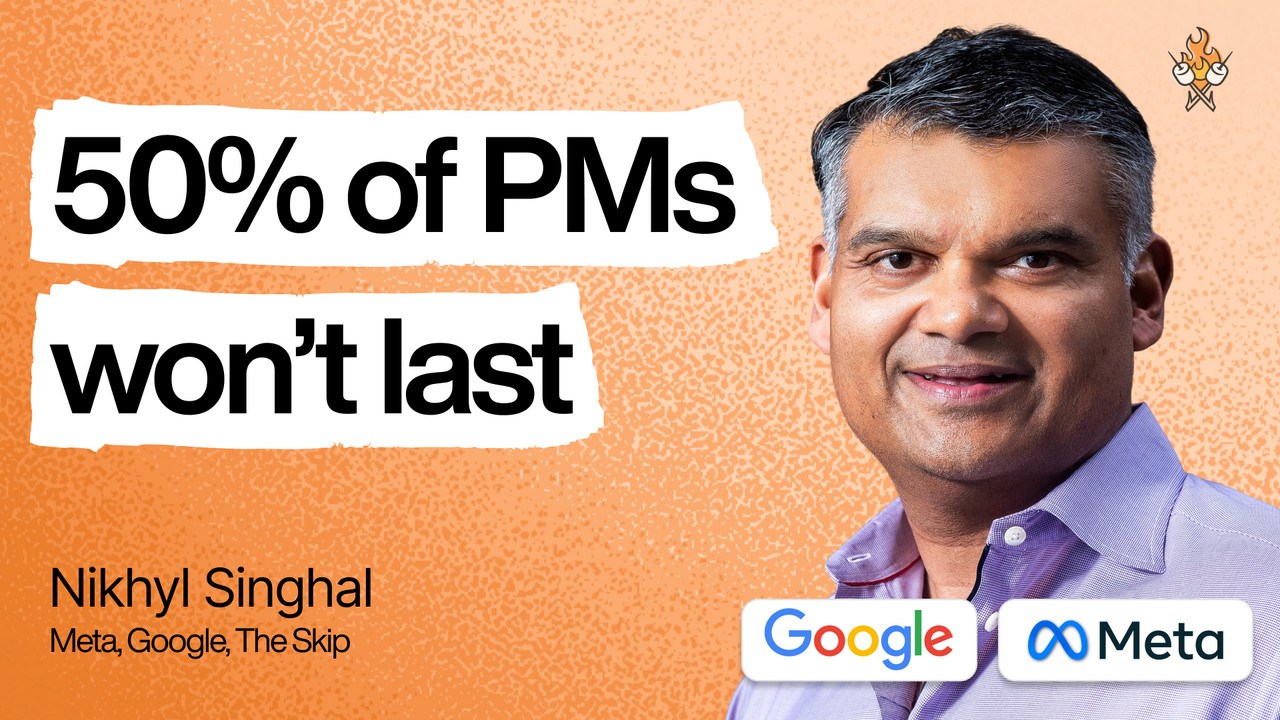
PODCASTI went into this episode with low expectations and assumed it would be the usual surface-level conversation made for attention. Instead, it turned out to be unexpectedly honest, thoughtful, and genuinely useful. A few moments, especially around patterns of disappointment and expectation, really stayed with me. I’m still thinking through parts of it, which is usually a sign that something worthwhile was said. Easily one of the most impactful listens I’ve had in a while, well worth your time.
IN OTHER NEWS
Scientists at Northwestern University have finally cracked the code on "SuperAgers", those rare 80-plus-year-olds who have the memory and cognitive zip of someone in their 50s. It turns out their secret isn't just "staying busy." These people have a distinct biological profile where their brains actually resist the typical "trash" buildup (like tau tangles and amyloid plaques) associated with Alzheimer’s.
Researchers have engineered a new type of "smart" caffeine molecule designed to target specific receptors in the brain without the usual side effects. This isn't just about staying awake; it’s about precision. By tweaking the molecular structure, they’ve created a version that boosts focus and cognitive processing power while completely bypassing the adenosine receptors that cause jitters, heart palpitations, and the inevitable 3:00 PM crash. It effectively isolates the "brain power" part of the drug from the "anxiety" part.
Wishing you a productive week ahead!
The Mimimum Viable Product Team: Amod and Damian read your emails and comments daily. Let us know what you like and what you don’t like.